

The Anglican Schism has finally happened and the Anglican Communion is now tragically rent asunder.

The Anglican Schism Finally Eventuates
In a recent statement by GAFCON, the Global Anglican Futures Conference, it declared a re-ordering of the Anglican Communion.
GAFCON is a movement of conservative Anglican churches that formed in 2008 in response to theological disputes within the worldwide Anglican Communion, particularly concerning sexuality and biblical authority. GAFCON represents the majority of global Anglicanism, with membership exceeding 85 million Christians across more than 50 countries. The movement has particularly strong representation in Africa, Asia, and South America.
Note, GAFCON is NOT breaking away from the Anglican Church, rather, they are declaring that they and they alone ARE the Anglican Church.
“As has been the case from the very beginning, we have not left the Anglican Communion; we are the Anglican Communion.”
Let me explain what a big deal this is. This is more than a denominational tiff, a breakdown of relationships, or even a split. It is a usurpation and revolution within Anglicanism. It is a coup d’état!
In other words, the Anglican Church, the church of the Angles, has ejected its English mother from the global Anglican communion.
This is like Serbian Orthodox churches around the world ejecting Serbia from the Serbian Orthodox network of Serbian churches. Or it’s like the Southern Baptist Churches in Canada declaring that any Southern Baptist Church south of the Mason-Dixon line is no longer a Southern Baptist Church and the Southern Baptist HQ in Nashville will be relocating to Montreal. It’s wowingly weird!

Who is Anglican Now?
GAFCON has now shifted from a potential shadow government of the Anglican Communion to declaring that it is the true body of the Anglican Communion in both de facto (in reality) and de jure (in law) measurements.
Is that true?
Well, if Anglicanism is determined by being in communion with the See of Canterbury, then, “No, they are not.”
But, if Anglicanism is determined by the episcopal representatives of the largest number of Anglican people, then “Yes, they are!”
Having written this, I have had a sudden epiphany.
Am I still Anglican?
Because, according to GAFCON, you cannot be Anglican and be in communion with the See of Canterbury. But, I’m part of the Anglican Diocese of Melbourne, which is part of the Anglican Province of Australia, which is in communion with the See of Canterbury. So, based on the GAFCON re-definition or re-ordering of Anglicanism, no, I am not Anglican.

The Ridley faculty addressed the topic of division at the church and denominational level in our book Mending a Fractured Church: How to Seek Unity with Integrity.
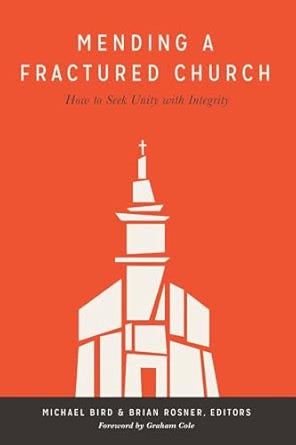
When Jesus prayed for his followers to be one, he prayed that this unity would demonstrate the truth of his claims to an unbelieving world. Sadly, the world often sees a church that is divided. Some of our divisions are based on legitimate theological concerns, yet many others are simply matters of opinion. So what are the differences worth dividing over? How should we handle diversity and difference?
A Reaction to the New Archbishop of Canterbury
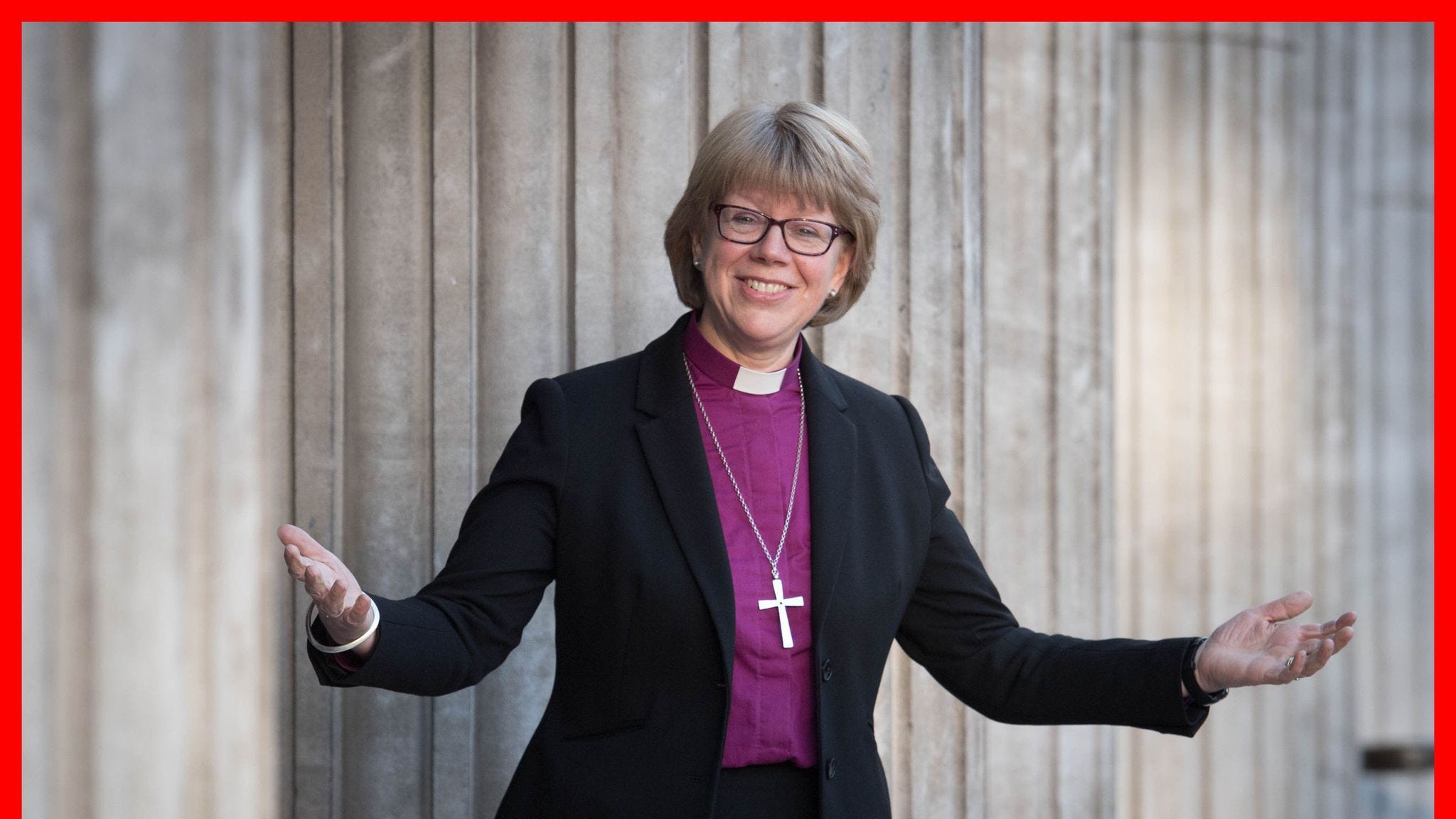
It seems like the straw that broke the communion’s back was the appointment of +Sarah Mullaly as the next Archbishop of Canterbury (which I wrote about here).
The GAFCON response was quite negative and adversarial. Far better was the response from EFAC (the Evangelical Fellowship of Anglican Clergy), which pointed to the fissures and grievances within the global Anglican communion, but had a far more collegial and catholic spirit, and welcomed +Sarah to her new role as Archbishop of Canterbury (ABC).
Sadly, even though GAFCON includes provinces that ordain women to various holy orders, I think the appointment of a woman as ABC, and therefore “first among equals” in the communion, was too much for some to withstand. +Sarah’s progressive stance on sexuality and marriage no doubt also gave cause for concern, though I suspect it was her being a woman that was the decisive factor, since other archbishops have held similar views before her appointment.
When +Sarah takes office, she will be the centre piece of a much smaller segment of people claiming to be Anglicans and will have a mostly western and mostly white network of international episcopal colleagues.
How Did This Happen?
The schism has been a long time in the making and represents the result of divisions that have fermented over 30 years.
Since the late 1990s, it has been clear that the global south and western provinces have different attitudes towards sexuality, which is sometimes a matter of interpretation but other times indicative of differing attitudes towards the authority of Holy Scripture. At a Lambeth Conference in 1998 - a ten-yearly meeting of Anglican bishops - the communion adopted Lambeth resolution 1.10, which explicitly rejects homoerotic practices. However, most Western provinces refused to uphold it and refused to enforce it.
Then, in 2003, the Episcopal Church in America consecrated an openly gay and non-celibate Gene Robinson as Bishop of New Hampshire. Despite the American Primate Frank Griswold telling the other Primates that he would not ordain him, he went and ordained him. This heightened concerns that parts of the Anglican Communion were departing from biblical teaching and biblical authority.
Several things transpired that added further fuel to the fire:
(1) Western provinces continued ordaining openly gay clergy and blessing same-sex marriages;
(2) Western provinces were duplicitous in their interactions with Anglican leaders from the global south in that they said one thing but often did another;
(3) Western provinces began to push a narrative whereby African Anglicans were primitive and gullible persons who had been brain-washed by reading too many American evangelical websites and just needed a white boss to explain to them the true nature of Christianity, which included the inherent goodness of homoerotic sex;
(4) There were reports, meetings, and attempts under ++Rowan Williams (ABC from 2002-12) to come up with a covenant that bound provinces together with a sort of consensual understanding of what the Anglican Communion was and an agreed code of conduct. But it was rejected by the Church of England at the very start, so it did not even get off the ground. Progressive provinces were not going to legislate a stick to be used to drive them out of global Anglicanism;
(5) In the 00s, many conservative dioceses and parishes left TEC (The [American] Episcopal Church), and despite some fragmentation and fracturing, they eventually formed ACNA (the Anglican Communion in North America). Now, ACNA is not technically part of the Global Anglican Communion as it is not in communion with the See of Canterbury, but it is in communion with GAFCON. Thus, we have two Anglican bodies in the USA, each claiming to represent Anglicanism, with different claims to legitimacy based on a Canterbury vs. GAFCON polarisation (plus there are other Anglican bodies going back to an earlier split in American Anglicanism in 1979, such as the Reformed Episcopal Church, etc.).
(6) Under the term of ++Justin Welby as ABC (from 2012-2025), despite being of evangelical stock, nothing was advanced to repair the broken communion between provinces. In fact, Welby’s defection to a more progressive view of sexuality served to increase distrust of himself and the office of ABC.
I think the blame for the schism lies at the feet of ++Rowan Williams and ++Justin Welby because there was a mechanism to address the problem, but they point-blank refused to use it.
All they had to do was bring together all the bishops of the global Anglican communion, create an international synod, then give speeches, have debates, make motions, and vote as a collective body on two things.
(1) “Do we uphold Lambeth Resolution 1.10 - yes or no?” Then (2) “Do we expel provinces who refuse to uphold Lambeth Resolution 1.10 - yes or no?” And that would be it!
The schism could have been avoided by a robust demonstration of Anglican synodality at a global level.
But instead, Williams and Welby refused to let any Anglican body vote on anything that one part of the Anglican communion might not like the results of. There were endless meetings, a plethora of communiqués that were word salads, and nobody was allowed to decide anything with any effect.
As a result, for the past thirty years, the Anglican communion has been living in an endless divorce court where the jury is never allowed to meet to deliberate and deliver a verdict, instead, the judge simply insists on hearing more evidence and more testimony, and it never ends.
The process has continued ad nauseam and now the global south bishops have had enough. They did not vote to leave, they simply announced that they are taking over.
All of this goes back to a famous statement by the then Anglican Primate of Nigeria, Archbishop Peter Akinola, who famously said that “we don’t need Canterbury to get to Jesus.”
That it seems is the new motto of the re-ordered Anglican Communion.
The Future of Anglicanism
According to the GAFCON declaration, there are now three things that define Anglicanism.
5. Provinces of the Global Anglican Communion shall not participate in meetings called by the Archbishop of Canterbury, including the ACC, and shall not make any monetary contribution to the ACC, nor receive any monetary contribution from the ACC or its networks.
6. Provinces, which have yet to do so, are encouraged to amend their constitution to remove any reference to being in communion with the See of Canterbury and the Church of England.
7. To be a member of the Global Anglican Communion, a province or a diocese must assent to the Jerusalem Declaration of 2008, the contemporary standard for Anglican identity.
In other words, refusal to have fellowship with the Archbishop of Canterbury, abstention from meeting with Anglicans who do, and affirmation of the 2008 Jerusalem Declaration.
As a traditional, missional, and evangelical Anglican, I’m generally pro-GAFCON, but there are features here that deeply disturb me. For a start, defining membership in a communion by who you must separate from is not indicative of a healthy ecclesiology. This reminds me of the doctrine of two degrees of separation in American fundamentalist churches. That seems to be sectarian rather than catholic, insular rather than missional, defining holiness by separation rather than by consecration and conduct.
While I can understand the requirement to affirm the 39 Articles, Lambeth Resolution 1.10, and the Jerusalem Declaration, I’m utterly baffled by the demand to cut off relationships with the Archbishop of Canterbury before she has even begun to act in her role, or why it is mandated that GAFCON Anglicans must cease constructively engaging with other Anglicans.
I can tell you now that these demands will be divisive within GAFCON provinces and GAFCON sympathetic diocese and churches. The GAFCON exhortation is, in effect, “Pick a side and burn your bridges.” But many conservative Anglicans will not be willing to do that, at least not yet.
For instance, in Australia, with +Ric Thorpe’s appointment as the next Archbishop of Melbourne, there will now be a thin majority of Anglican bishops in Australia who are evangelical or evangelical-adjacent. So why leave?
Furthermore, history tells us that when a denomination splits, the splits then multiply. When conservative Anglicans left TEC in the early 00s, that is precisely what happened among them, and even ACNA is still divided over women’s ordination.
So I worry that GAFCON will soon divide further over provinces and dioceses that ordain women to holy orders. Some within GAFCON would welcome an expulsion of ordained women; while others will be reluctant to narrow the parameters of GAFCON any further. We’ll see what happens!
Summary
When I woke up this morning, I believed I was Anglican. It is now late into the night and suddenly I’m not so sure. I’m speaking of Anglican politics of course. My theology and ecclesiology are still very Anglican. But who recognizes me as Anglican, that is a more complicated matter. I guess we’ll find out tomorrow.
Let me leave you with these words from Romans 14:19: “Let us pursue the things that make for peace and mutual edification.” Amen.
Here is a 30-minute video where I explain what is going on in the Anglican Communion.
Thank you for this wise discussion. I am troubled by GAFCON's departure, and troubled more by its claim to replace Canterbury with itself. The tone of that claim strikes me as arrogant, and the underlying rationalization -- that to preserve the appearance of unity and authenticity, one must deny not only the authority of the rejected group but also their reality -- is at best naive. As a former Eastern Orthodox clergyman, I think I'm conservative. I treasure the tenets of the Niceno-Constantinopolitan Creed. But I've tired of the Roman Catholic and Orthodox insistence on male-only clergy and its inherent complementarianism -- as well as the latter's recent tendency toward rightwing partisanship. Which, by the way, I wonder if that, too, is not in the background of GAFCON. They will engage in schism for hotbutton culture war issues -- but will they be so passionately concerned for social concerns that get a lot more explicit mention in the Bible? Who has ever broken off from a denomination because that body did not do enough for the poor, the oppressed, and the marginalized? Now that would be refreshing.
Thanks for this, Mike. Very helpful.