
The Augustinian Pastor
A New Book on What Augustine Can Teach us About Pastoral Ministry Today

Augustine was a towering figure of church history, who combined theology, exegesis, spirituality, and pastoral care in his ministry and writings. Below is a guest post by Rev. Dr. Joey Sherrand about his new book The Augustinian Pastor: Deep Wisdom for Modern Ministry.
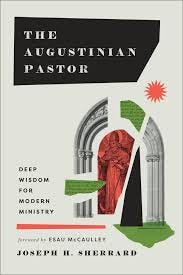
Guest Post by Joey Sherrand
On an ordinary Sunday morning in Roman Africa in the early fifth century, Augustine of Hippo, one of the great minds of world history, a man known to us today as a peerless theologian, a perceptive intellectual, and a political theorist, looked out on the congregation assembled in the basilica in Hippo Regius, and once again faithfully discharged the task that had been entrusted to him years before on a similar Sunday morning: he preached the Word of God to the people of God. Years before as a newly baptized Christian, he had snuck into the back of Sunday morning worship in that same church, hoping to remain an anonymous worshipper, only to find himself unexpectedly and against his will conscripted into ordained ministry. And so that Sunday, Augustine—perhaps feeling a bit nostalgic on the anniversary of that unlikely and fateful turn of events—reflected on the heavy sense of responsibility that he still felt about his calling. “From the moment this burden… was placed on my shoulders, anxiety about the honor shown me has always been haunting me” (Augustine, Sermon 340.1).
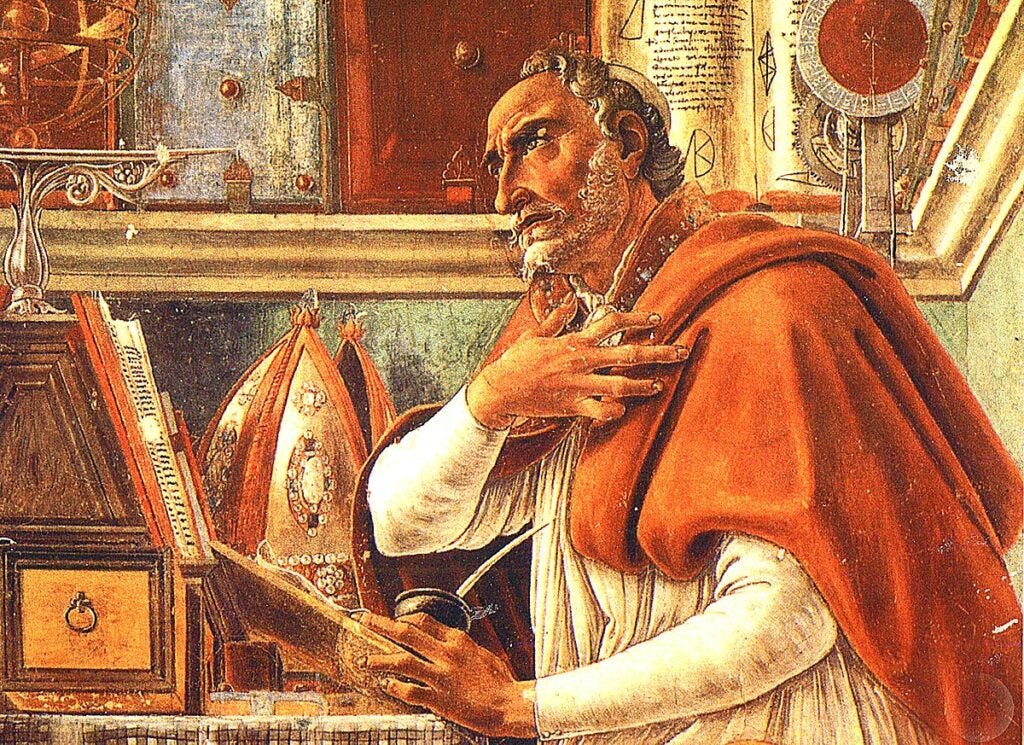
A great deal of time and history separates us from Augustine, but one thing has certainly not changed: pastoral ministry remains as challenging, rewarding, and difficult today as it was for the Bishop of Hippo. Today we, too, know the anxiety of having this burden placed on our own shoulders. Augustine had a profound sense of the dynamics, challenges, and joys of pastoral ministry. For forty years it was pastoring that consumed his days and his intellectual and spiritual energies. All of the great works we remember Augustine for—The City of God, The Trinity, Confessions—were all penned by a man who spent his days doing the work that pastors today know so well: preaching, teaching, visiting, shepherding.
Pastors need to draw from a deep well for our work. We need wise voices that can steadily guide us when we feel the weight of the calling entrusted to us. The Augustinian Pastor is my attempt to share what I have learned when I apprenticed myself to Augustine of Hippo for the work of pastoral ministry. During a season of ministry when I felt acutely my own need for a mentor who would help me as I sought to persevere in this calling and to love the people that God has entrusted to me, I re-discovered Augustine and found in his life and writings a pastor who could shepherd me in my work.
The book is divided into two main sections. After a brief introduction to Augustine’s life (including an orientation to the forty years of his life as a local church pastor which are not narrated to us in the Confessions), the first section examines what Augustine thought about the person of the pastor. In chapter 1, I consider “The Pastor’s Story.” Augustine was a man who had meditated on the strange workings of providence in his life, not only for what they taught him about God’s faithfulness in the past but also for how they helped him to understand what was required of him for faithfulness in the present. In chapter 2, “The Pastor’s Rule,” I explore how the monastic rule that Augustine authored helps us to understand our own need for an ordered way of life. The next chapter, “The Pastor’s Friends,” helps us to see the importance of friendship in pastoral ministry as we explore Augustine’s theology of friendship and the significance of his own pastoral friendships. And chapter 4, “The Pastor’s Heart,” is a meditation on the significance of humility for pastors and how we can cultivate this virtue in the face of pride’s subtle snares.
Table of contents
Foreword by Esau McCaulley
Introduction: The Mentor You’ve Been Looking For
Part 1: The Person of the Pastor
1. The Pastor’s Story
2. The Pastor’s Rule
3. The Pastor’s Friends
4. The Pastor’s Heart
Part 2: The Practices of the Pastor
5. The Pastor and the Cure of Souls
6. The Pastor as Preacher
7. The Pastor as Catechist
8. The Pastor as Ecclesiologist
Conclusion: Becoming an Augustinian Pastor
The second part of the book explores the practices of pastoral ministry as we see them in Augustine’s own life. Augustine is well-known for his concept of the ordering of loves (the ordo amoris), and in chapter 5 this concept is surveyed to help us to understand the primary pastoral work of the cure of souls. In chapter 6, “The Pastor as Preacher,” I draw attention to what we can learn from Augustine for the practice of proclaiming God’s Word. Augustine not only wrote a handbook for preaching (Christian Teaching); he also preached multiple times a week, making the sermon in many ways the main medium for his theological work. Chapter 7, “The Pastor as Catechist,” explicates the rich formational structure that Augustine utilized to disciple his people. And chapter 8, “The Pastor as Ecclesiologist,” helps pastors and ministry leaders to think well about the Body of Christ.

Pastors today need more training and theology for their work today, not less. My prayer is that by looking to Augustine, a great mind and also a faithful local church pastor, we’ll all find ourselves better equipped for the work of ministry.